
Loading...
Serving Makakilo, HI and surrounding areas. (808) 481-0860
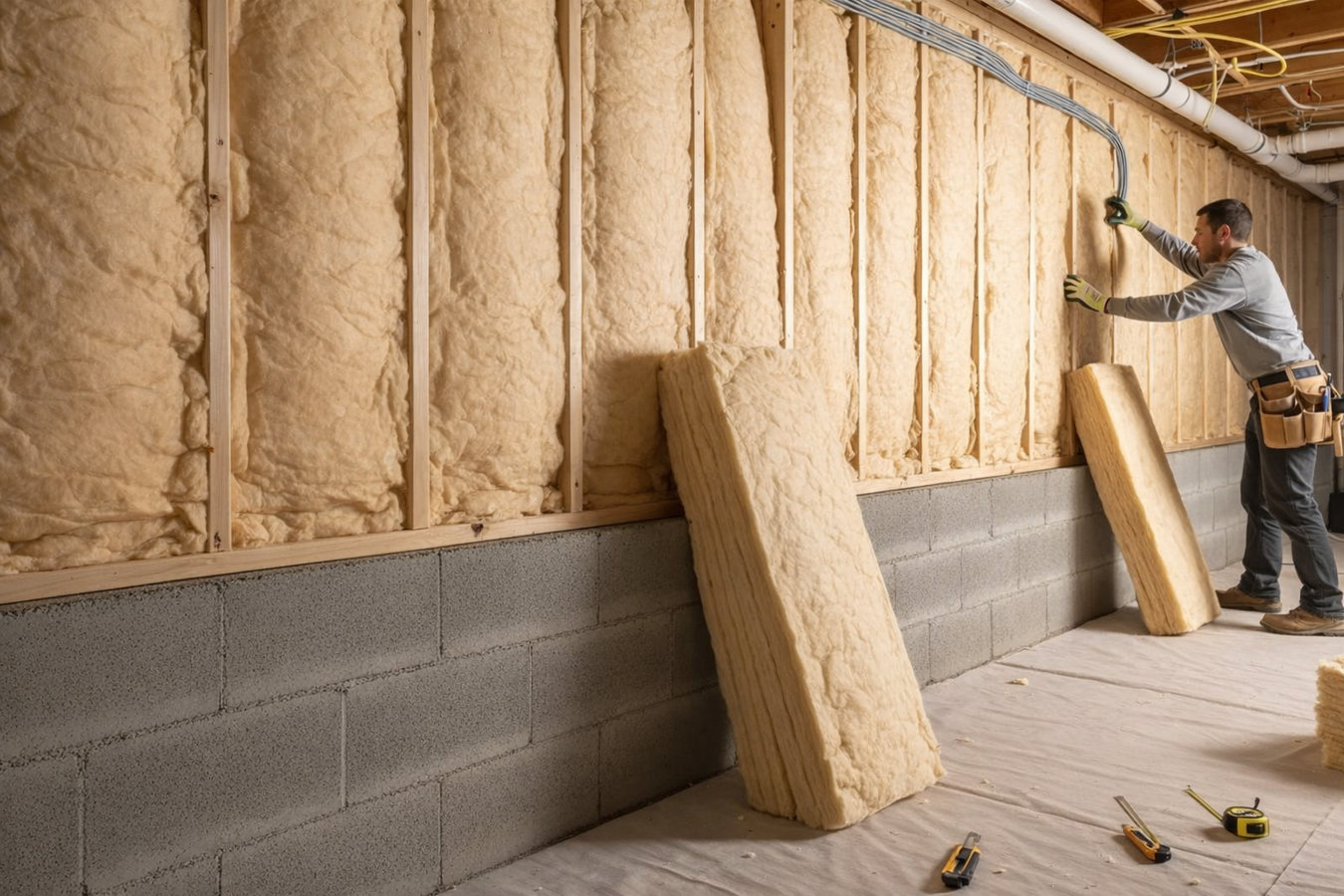
Hot, stuffy lower-level rooms and climbing electric bills often point to the same problem - bare concrete walls letting heat and humidity right in.
Basement insulation in Makakilo, HI means insulating the interior walls of lower-level rooms, utility spaces, or concrete block walls that separate a conditioned room from the outside, most jobs take one to two days depending on space size and material choice. Because most homes here sit on concrete slabs rather than traditional wood-framed basements, the work looks different than a mainland project - but the outcome is the same: a room that holds its temperature and stops draining your AC.
If you have a lower-level room that stays uncomfortable no matter how long the AC runs, uninsulated concrete walls are often the reason. Heat moves through bare concrete faster than through an insulated wall, and in Makakilo that adds real money to your monthly bill. Many homeowners also combine lower-level wall work with closed-cell foam insulation to address moisture and air sealing at the same time.
Hawaii homes require a different approach than mainland construction. Concrete block walls and slab foundations call for moisture-resistant materials and a contractor who understands tropical building conditions - not a mainland playbook applied in the wrong climate.
If a lower-level or ground-floor room stays stuffy and warm even when the rest of your Makakilo home is comfortable, the walls are likely pulling outdoor heat directly into the space. Makakilo's sunny, west-facing exposure means concrete walls absorb significant heat during the day and radiate it inward for hours after sunset. Insulating those walls creates a buffer that keeps the room usable.
Makakilo's elevation means cooler nights, and when warm humid air meets a cool concrete wall, condensation forms. If you see water droplets, notice paint bubbling near the base of a wall, or smell something musty in a lower-level room, moisture is getting in. That is a sign the wall assembly needs attention, and insulation done correctly is part of the solution.
Hawaii's electricity rates are already high, and if your air conditioner is running longer than it used to without any change in your habits, uninsulated walls may be the reason. Heat moving through bare concrete forces your cooling system to work harder. If your bills have crept up, a quick wall assessment is worth doing.
Many Makakilo homeowners are converting garages, utility rooms, or storage areas into bedrooms or offices. Before you close up those walls with drywall, insulating them is the right time to do it - and far easier than retrofitting later. Skipping insulation during a conversion is one of the most common regrets homeowners mention after the fact.
We work with the two materials best suited to Hawaii's concrete construction and humid climate. Spray foam expands to fill every gap and creates a moisture barrier at the same time, making it the stronger choice for walls that have any exposure to condensation. For accessible, flat concrete walls, crawl space insulation techniques using rigid foam board are also effective - panels are cut to fit and secured directly to the block surface, with seams taped to limit moisture movement.
Every project starts with a moisture check. Installing insulation over a damp concrete wall without addressing moisture first leads to mold behind the panels - often invisible until it becomes a serious problem. We check before we install, and if we find moisture, we tell you what needs to happen before the insulation goes in. For homes where the entire lower level needs attention, we can also coordinate with closed-cell foam insulation for a complete air and moisture seal.
Best for walls with moisture exposure, gaps around pipes or electrical, or anywhere a complete seal matters more than cost.
Best for accessible, flat concrete block walls where the surface is dry and the project budget is the primary consideration.
Suited for homeowners finishing a garage, utility room, or storage space into a bedroom, office, or living area.
Recommended before any insulation work on concrete walls, particularly in Makakilo where condensation on lower-level walls is common.
Makakilo sits at roughly 800 to 1,200 feet elevation on the western slopes of the Waianae Range. That elevation creates temperature swings between day and night that are more pronounced than in lower-lying Oahu neighborhoods - and those swings cause condensation to form on concrete walls more readily than most homeowners expect. The vast majority of homes here were built with concrete slab foundations and concrete block walls, a construction type that transfers heat and moisture differently than wood framing and requires a different insulation strategy. Skipping a moisture assessment before insulating is the single most common reason homeowners end up with mold problems behind newly installed material.
Hawaii consistently ranks as the state with the highest residential electricity rates in the country. For homeowners here, reducing the load on your air conditioner is a genuine financial priority - not a nice-to-have. Homeowners in Kapolei and Ewa Gentry face similar concrete construction and similar humidity challenges. The U.S. Environmental Protection Agency recommends addressing moisture before insulating any below-grade or concrete surface - advice that is especially relevant in Hawaii's tropical climate.
We respond within 1 business day. Tell us the size of the space, what the walls are made of, and whether you have noticed any moisture issues. That helps us show up prepared rather than starting from scratch.
We walk through the space, measure the walls, and look for signs of moisture or existing damage before recommending any material. This step is non-negotiable - we will not skip it or rush it, and you should ask questions while we are there.
After the assessment you receive a written quote breaking down material and labor costs. It will also tell you whether a permit is needed for your project and who handles that process. No verbal-only quotes.
Most lower-level jobs complete in one to two days. If spray foam is used, you will need to clear the area and plan to stay out for several hours while it cures. Before we leave, we walk through the finished work with you so you can see the coverage yourself.
We respond within 1 business day. There is no obligation - just a straight conversation about your space and what it needs. After you submit, someone from our office will call to schedule a free on-site estimate at a time that works for you.
(808) 481-0860We assess for moisture before any insulation goes in. Installing over a damp concrete wall is the most common reason lower-level insulation projects fail in Hawaii - we eliminate that risk before work begins.
Most Makakilo homes have concrete block walls and slab foundations, not wood framing. We work with these structures every day and know which materials and methods hold up in Hawaii's humidity - not the mainland approach transplanted to an incompatible climate.
We use moisture-resistant materials rated for Hawaii's humidity. The{' '} North American Insulation Manufacturers Association recommends matching material selection to climate conditions - in Hawaii, that means avoiding moisture-absorbent options against bare concrete.
We handle permit applications when required under the City and County of Honolulu's requirements. Permitted work is inspected and documented, which protects your home's value and gives you proof the job was done correctly when you sell.
Every project we take on in Makakilo follows the same standard: moisture assessment first, right material for the wall type, and a final walkthrough before we consider the job done. The City and County of Honolulu requires permits for certain insulation work - we handle that process so you do not have to.
Dense, moisture-resistant spray foam that seals and insulates concrete walls and roof decks in a single application.
Learn MoreInsulation and moisture control for the underside of your home, keeping humidity and heat from rising into living areas.
Learn MoreEvery day without insulation is another day your cooling system works harder than it should. Contact us now and we will get a free on-site assessment scheduled within the week.